
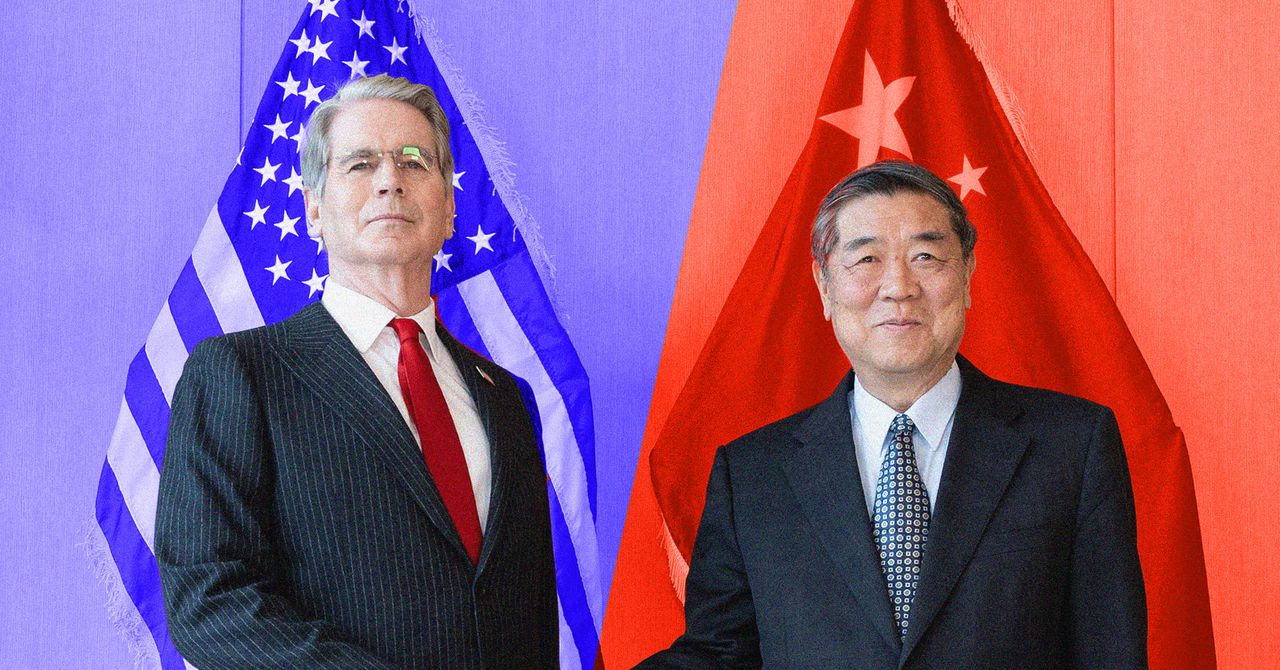
Talks have begun between US and Chinese officials to propose a mechanism for the two countries to notify each other of artificial intelligence incidents which could threaten national security.
The framework, called the US China AI Dialogue, would also see representatives from both countries meet again to discuss the technology and try to align on common goals and threats, Treasury Secretary Scott Bessent said.
“We think that, just like with any cross-border activity, that moving from opaque to more transparency between the number one and the number two AI powers in the world is very important,” Bessent told reporters on Sunday.
Bessent said the discussions picked up from where they had been left off after US President Donald Trump’s visit to Beijing in May. Since then, public safety concerns about the technology have grown. Security incidents over the summer, including OpenAI’s agents hacking Hugging Face, highlighted the capabilities of frontier models and how the industry’s safeguards have failed to keep pace.
Fears reached a fever pitch earlier this month after Anthropic employees warned AI could be on course to wipe out humanity. In recent weeks, leaders of the biggest frontier laboratories, including OpenAI’s Sam Altman, Anthropic’s Dario Amodei, and Elon Musk, have called for a slowdown in development of the technology while they set safety standards. In an essay suggesting steps for laboratories and governments to pace the technology’s development, Amodei had asked for government assistance in establishing international coordination, including with the Chinese Communist Party.
Trump has so far mostly brushed off their calls, despite growing bipartisan support for regulating the industry. The US government already has sufficient criminal and regulatory power over developers, his administration has argued.
He’s not alone. Jensen Huang, chief executive officer of Nvidia, which builds AI infrastructure, pointed out that AI firms are already subject to cybersecurity and damage liability laws. “Apply that first,” he said in an interview with CBS News over the weekend. “Don’t let this doomsday narrative allow someone to relieve them of the laws that currently exist.”
Trump has said any slowdown could cede the US lead in the technology to China—a danger because, in his own words: “WHOEVER WINS AI, WINS!” His chief science advisor David Sacks previously warned that “China is very unlikely to join a global agreement” on pacing the technology. Thomas Wolf, cofounder of open-source AI platform Hugging Face, which Nvidia recently agreed to buy, has questioned whether the US can build global cooperation while “explicitly stating you want to design it to keep widening your own lead.” “That seems like a pretty counterproductive way to start the conversation to me,” he wrote on X in response to Amodei’s essay.
The US is currently trying to temper China’s advance in AI by restricting exports of advanced chips and chipmaking technology to China. Officials did not discuss these US export controls in this weekend’s meetings, said Bessent, which also featured trade discussions and were “very successful” ahead of this week’s visit to Washington by Chinese President Xi Jinping.