
As it steadily grows its share in business markets, Apple has at last introduced its very useful collection of services for small and mid-sized businesses (SMBs), Apple Business Essentials, outside the US; except it’s not called Apple Business Essentials, and much of it will be free.
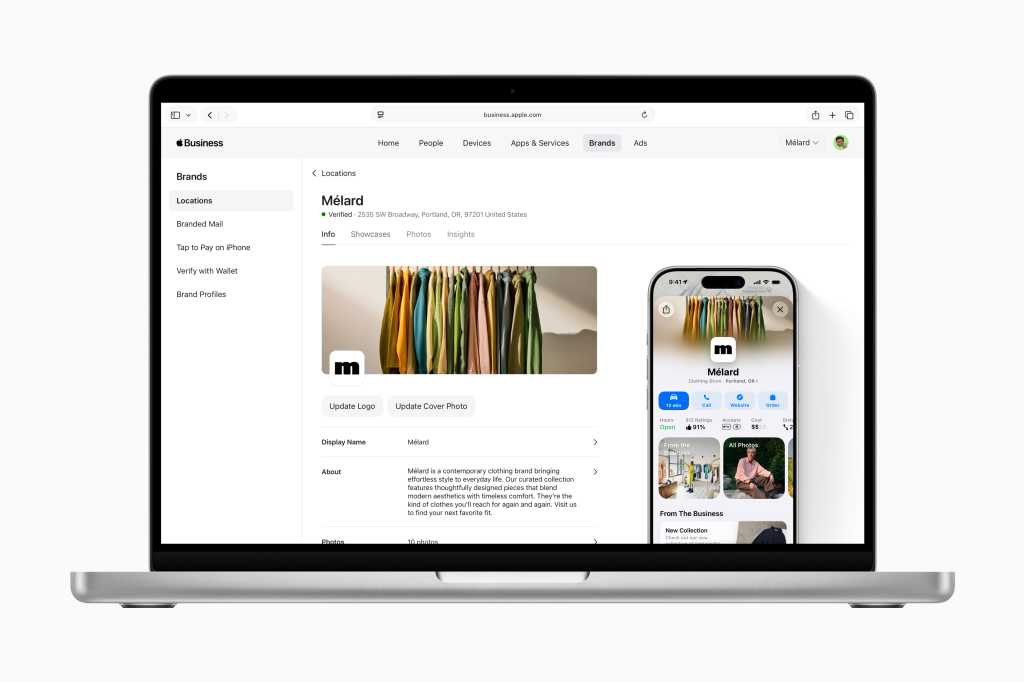
First introduced November 2021 following the company’s acquisition of Fleetsmith, Business Essentials is a collection of tools focused on the needs of SMBs. It includes Apple-friendly MDM tools, services, storage, and premium AppleCare and support options. It also includes free business-class domain-based email and calendar services, custom domain support, and location-based advertising within Apple Maps along with powerful tools for brand management.
The entire cornucopia of services is being made available via the all-new Apple Business portal, which combines Apple Business Connect, Apple Business Essentials, and Apple Business Manager all in one place. The idea is to make it much easier for any business to manage its tech and its presence from within the Apple ecosystem, though not every feature will be available in every place.
“Apple Business is a significant leap forward in our decades-long commitment to helping companies of all sizes leverage the power of Apple products and services to run and grow,” Susan Prescott, Apple’s vice president of enterprise and education marketing, said in a statement. “We’ve unified Apple’s strongest business offerings into one simple, secure platform, delivering key features for organizations in every stage and sector, including built-in device management, collaboration tools, and additional ways to reach new customers….”
What is Apple Business?
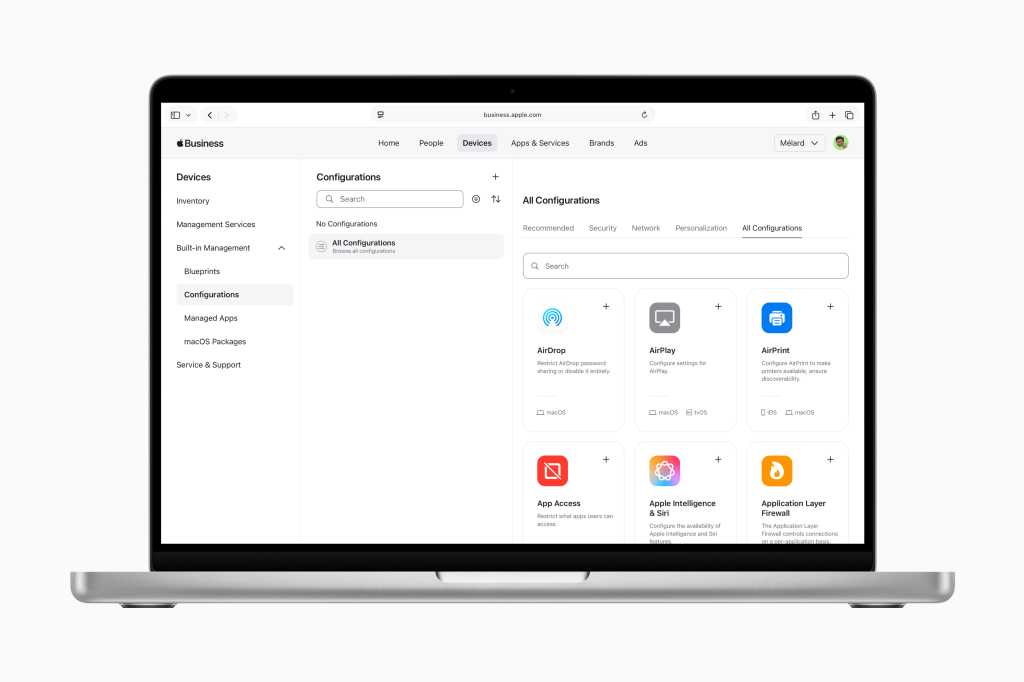
Apple Business will be available starting April 14 in more than 200 countries and regions. The new platform offers all of Apple’s key business-focused services with a few additions. For most business users, the most important tool will be the built-in mobile device management service Apple can provide. While not pretending to be anything as granular as MDM services from the likes of Jamf, Iru, or Hexnode, what is available will help SMBs manage, deploy and configure new Apple hardware.
Some of the features include:
- Managed Apple accounts that separate private employee data from company information through integration with an identity service provider.
- The ability to configure employees and/or employee groups.
- Tools to manage device settings and security.
- Tools to manage and deploy apps and settings using Blueprints and the App Store.
- Zero-touch deployment of new hardware.
Apple’s APIs offering access to device, user, audit, and MDM service data are also now available to businesses seeking even more control — particularly for larger deployments. For many smaller enterprises, what matters most is that the basic MDM features are now free, rather than requiring a subscription as before. The company offers 5GB storage for employee accounts, with higher amounts starting at 99 cents per person.
The company also announced that AppleCare+ for Business coverage is available per device or per user, starting at $6.99 per month, or $13.99 per month per user for up to three devices. When this was first introduced in 2022, it offered 24/7 access to phone support, training for both IT admins and employees, and up to two device repairs per plan — by individual, group, or device — each year. (I’m not clear yet on whether that component of the service offers as much.)
Competing with Google Workspace and M365?
What Apple now has on offer means it is putting together a viable competitor for existing productivity suites. Not only has it made it possible to use custom domains for email, and to populate your online presence with pro-seeming details such as logos that appear in outbound emails, but it also supports Apple Business with free apps such as Pages or Keynote. And it now provides fully integrated email, calendar, and directory services.
Put it all together and you can use Apple Business to drive efficiency in business, with scheduling tools like calendar delegation, a company directory, and personalized contact cards.
Apple also offers its own collaboration tools such as Messages, FaceTime, and FreeForm, which, when you add it up, means many business users might now think Apple’s platforms offer particularly good value — particularly as the cost of entry to the ecosystem falls.
The only surprise to m, is why Apple hasn’t corralled all of this together under the iconic “Apple Works” brand. But, as predicted shortly after the service first appeared, today’s news can only intensify the company’s bid to woo business users.
You can follow me on social media! Join me on BlueSky, LinkedIn, and Mastodon.